
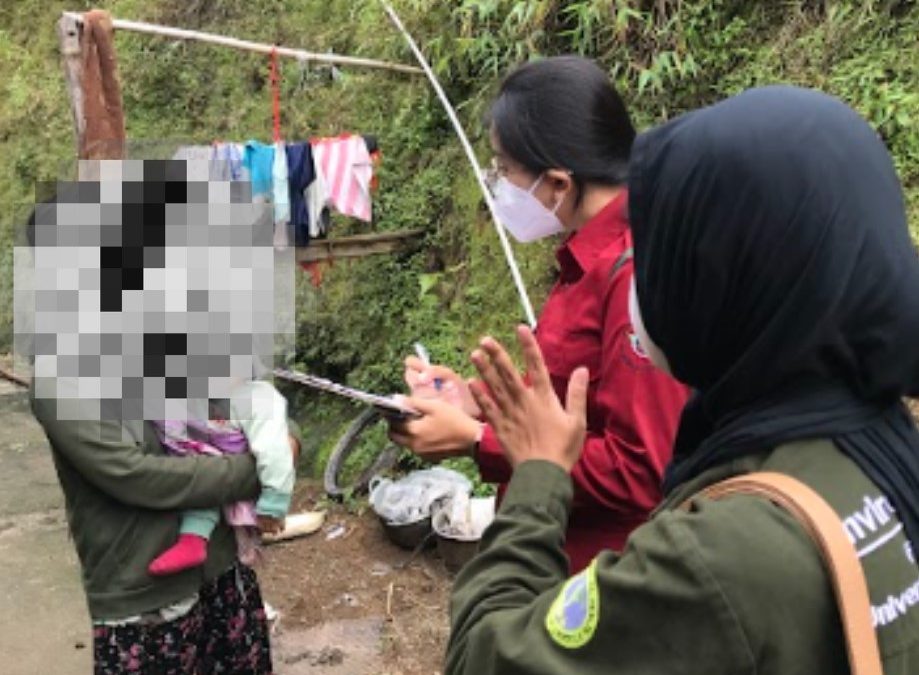
At the end of 2024, the village of Jrakah in Selo District, Boyolali, was shocked by the discovery of suspected measles cases. Without delay, a health team alongside students from the Field Epidemiology Training Program (FETP) Master’s in Epidemiology at UNDIP, Lorda Presenta, immediately conducted a thorough investigation to map the spread and source of the outbreak.
The results? Within just two weeks, seven boys aged 6–17 were reported to have been infected! One case has been confirmed positive for measles, while the remaining six remain suspected cases. Transmission is believed to have occurred in the home and school environments—two places that should be safe zones for children.
The clinical symptoms affecting these patients are not to be taken lightly: 100% experienced high fever and a rash over their entire bodies. It doesn’t stop there; some also suffered from coughing (28.6%), red eyes (28.6%), and a runny nose (14.3%).
However, the most concerning fact is the low vaccination coverage. Only one out of seven children had received the MR (Measles-Rubella) vaccine as infants/toddlers. Although three out of four other children had received the MR booster vaccine in first grade—this underscores how vital equitable vaccination is for building herd immunity.
The Health Department is taking action. Two decisive measures have been recommended: increase basic immunization coverage throughout Jrakah Village, and grant a 1–2 week sick leave for infected children to break the chain of transmission. The message is clear: Measles is not a trivial disease! Protect our children with complete immunization, because prevention is far better than treat.
Recent Comments